LEARN HOW TO PROSPER USING THE INTERNET IN 2025!



Jobs Report 2025: Key Insights and What It Means for the U.S. Economy
The U.S. jobs report is a critical indicator of the nation’s economic health, providing a snapshot of employment trends, wage growth, and labor market dynamics. Released monthly by the Bureau of Labor Statistics (BLS), the May 2025 jobs report has sparked discussions among economists, policymakers, and everyday Americans. With the economy navigating post-pandemic recovery, inflation concerns, and technological advancements, this report offers valuable insights into the state of work in the U.S. In this detailed analysis, we’ll break down the key findings of the latest jobs report, explore its implications for various sectors, and provide actionable takeaways for job seekers and businesses alike.
BUSINESS AND FINANCE
Michel Lima
5/3/20254 min read

Overview of the May 2025 Jobs Report
The May 2025 jobs report revealed that the U.S. economy added 220,000 new jobs, slightly below economists’ expectations of 250,000. The unemployment rate held steady at 3.8%, reflecting a relatively stable labor market. Wage growth ticked up by 0.4% month-over-month, translating to an annual increase of 4.2%, a sign that workers are seeing modest gains in purchasing power despite inflationary pressures.
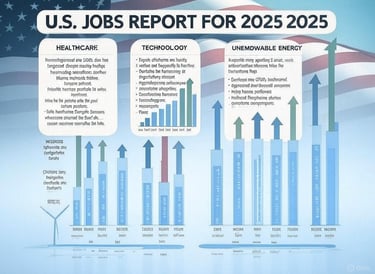
Job gains were broad-based, with notable growth in healthcare, technology, and renewable energy sectors. However, retail and traditional manufacturing saw slight declines, hinting at shifting economic priorities. The labor force participation rate edged up to 62.9%, indicating more Americans are re-entering the workforce, possibly driven by improving job prospects and rising wages.
Sector-by-Sector Breakdown: Where Jobs Are Growing
Understanding which industries are thriving can help job seekers and businesses align their strategies with market trends. Here’s a closer look at the sectors driving job growth in May 2025.
Healthcare: A Consistent Leader
Healthcare added 55,000 jobs, continuing its role as a powerhouse in the U.S. economy. With an aging population and increased demand for medical services, roles like nurses, medical technicians, and home health aides are in high demand. This sector’s growth reflects a long-term trend, making it a stable choice for career seekers.
Technology: Innovation Fuels Opportunity
The tech sector gained 40,000 jobs, driven by advancements in artificial intelligence, cybersecurity, and cloud computing. Companies are hiring software developers, data analysts, and IT specialists at a rapid pace. As businesses across industries embrace digital transformation, tech skills remain a ticket to high-paying, in-demand roles.
Renewable Energy: The Green Boom
Renewable energy emerged as a standout, adding 25,000 jobs. Solar and wind energy projects are expanding, creating opportunities for engineers, technicians, and project managers. Federal investments in clean energy, coupled with growing consumer demand for sustainability, are fueling this sector’s rise.
Areas of Concern: Sectors Facing Challenges
Not all industries experienced growth in the May 2025 jobs report. Retail saw a decline of 10,000 jobs, reflecting the ongoing shift to e-commerce and automation. Traditional manufacturing also lost 8,000 jobs, as companies increasingly adopt robotics and AI to streamline production. These declines highlight the need for workers in these fields to upskill and adapt to new technologies.
The report also noted a rise in part-time employment, with some workers citing underemployment as a concern. While the overall unemployment rate remains low, these trends suggest that not all Americans are finding the full-time, stable work they seek.
Wage Growth and Inflation: A Balancing Act
One of the most closely watched aspects of the jobs report is wage growth. The 4.2% annual increase in average hourly earnings outpaced inflation, which cooled to 2.5% in May 2025. This means workers are seeing real gains in their paychecks, a positive sign for consumer spending and economic growth.
However, some economists caution that rapid wage growth could reignite inflationary pressures if businesses pass higher labor costs onto consumers. The Federal Reserve is likely to monitor this trend closely, as it weighs decisions on interest rates. For now, the balance between wage growth and inflation appears sustainable, but it’s a delicate equilibrium that could shift in the coming months.
Implications for Job Seekers: How to Navigate the Market
The May 2025 jobs report offers valuable insights for those looking to enter or advance in the workforce. Here are some practical tips for job seekers:
Focus on High-Growth Sectors: Healthcare, tech, and renewable energy are hiring at a brisk pace. Consider roles in these fields, even if it means reskilling through online courses or certifications.
Upskill for the Future: With automation impacting retail and manufacturing, learning skills like coding, data analysis, or renewable energy technologies can make you more competitive.
Negotiate Your Salary: With wage growth on the rise, now is a good time to negotiate for better pay or benefits. Research industry standards and highlight your value to employers.
Explore Remote Opportunities: The report noted a rise in remote and hybrid roles, particularly in tech and professional services. These positions offer flexibility and access to opportunities beyond your local area.
What the Jobs Report Means for Businesses
For employers, the May 2025 jobs report underscores the importance of adapting to a competitive labor market. With workers re-entering the workforce and wages rising, businesses must prioritize retention and recruitment strategies.
Invest in Employee Development: Offering training and career growth opportunities can help retain talent, especially in high-demand sectors like tech and healthcare.
Embrace Flexibility: The rise in remote work highlights the need for flexible work arrangements. Companies that offer hybrid options may attract a broader talent pool.
Monitor Labor Costs: While wage growth benefits workers, businesses must balance these costs with profitability. Consider efficiency improvements or price adjustments to manage expenses.
Economic Outlook: What’s Next for the U.S. Economy?
The May 2025 jobs report paints a picture of a resilient economy, but challenges remain. The steady unemployment rate and job growth suggest stability, but the decline in certain sectors and the rise of part-time work point to uneven recovery. Economists are optimistic that continued investments in infrastructure, clean energy, and technology will drive further growth, but external factors like global supply chain issues or geopolitical tensions could pose risks.
The Federal Reserve’s response to this report will be critical. With inflation under control and wage growth moderate, the Fed may hold interest rates steady, providing businesses and consumers with predictability. However, any signs of overheating could prompt rate hikes, impacting borrowing and investment.
How the Jobs Report Impacts Everyday Americans
Beyond the numbers, the jobs report has real-world implications for American families. Rising wages mean more disposable income for households, which could boost spending on essentials and leisure. However, those in declining sectors like retail may face uncertainty, highlighting the need for accessible retraining programs.
The report also reflects broader societal trends, such as the push for sustainability and the digital transformation of work. For many, these shifts offer opportunities to build meaningful careers in growing fields, but they also require adaptability and a willingness to learn.
Conclusion: Navigating the Future of Work in 2025
The May 2025 jobs report offers a mixed but hopeful outlook for the U.S. economy. With job growth in key sectors, rising wages, and a stable unemployment rate, there’s much to be optimistic about. However, challenges like underemployment and sectoral declines remind us that the recovery is not uniform. For job seekers, businesses, and policymakers, the report serves as a roadmap for navigating the evolving labor market. By focusing on growth industries, embracing flexibility, and investing in skills, Americans can position themselves for success in this dynamic economic landscape.