LEARN HOW TO PROSPER USING THE INTERNET IN 2025!



Chasing the Northern Lights: Your Complete Guide to Aurora Borealis Forecasting
The Northern Lights, or Aurora Borealis, are a dazzling natural phenomenon that has captured human imagination for centuries. From vivid greens to mesmerizing purples, the sky comes alive when solar particles collide with Earth’s magnetic field. While the display itself is magical, knowing when and where to see it is part science, part strategy, and part luck. This guide will help you understand how Northern Lights forecasts work and how to improve your chances of witnessing this celestial spectacle.
Michel Lima
4/16/20253 min read
What Are the Northern Lights?
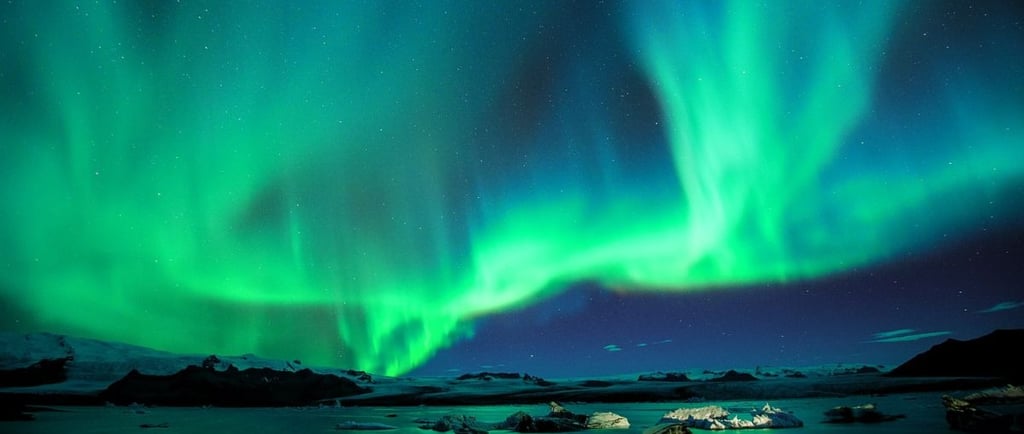
The Northern Lights are created when solar wind—a stream of charged particles from the sun—interacts with the Earth's magnetic field. These particles travel toward the poles and collide with gases in the atmosphere, resulting in glowing ribbons of light in the night sky. The color variations are based on the type of gas and the altitude at which the interaction occurs. Oxygen produces green and red auroras, while nitrogen can create blue or purple hues.
Why Are They Mostly Seen in the North?
The Earth's magnetic field channels solar particles toward the polar regions, which is why auroras are usually observed in high-latitude areas. This includes countries such as Norway, Sweden, Finland, Canada, and Alaska in the Northern Hemisphere. A similar phenomenon, the Aurora Australis, occurs in the Southern Hemisphere.
Understanding Aurora Forecasts
Aurora forecasts are designed to help you determine the best time and place to see the Northern Lights. These forecasts rely on data from satellites that monitor solar activity and geomagnetic conditions.
The Kp Index
One of the most important tools for aurora forecasting is the Kp index. This index ranges from 0 to 9 and measures geomagnetic activity. The higher the Kp number, the more likely you are to see the aurora at lower latitudes. For example, a Kp level of 3 might indicate visibility in Fairbanks, Alaska, while a Kp level of 7 could mean the aurora will be visible as far south as New York or Northern Europe.
Real-Time Aurora Forecast Tools
Several websites and apps provide real-time aurora forecasts:
NOAA Space Weather Prediction Center (SWPC)
Aurora Service (Europe and North America)
My Aurora Forecast & Alerts app
AuroraWatch UK
These tools use satellite data, solar wind measurements, and magnetic field readings to predict aurora visibility up to 27 days in advance, though accuracy improves the closer you get to the viewing date.
Best Places to See the Northern Lights
While high geomagnetic activity increases your chances, location is crucial. The best places to view the Northern Lights are far from city lights and as close to the magnetic pole as possible. Top locations include:
Tromsø, Norway
Fairbanks, Alaska
Yellowknife, Canada
Reykjavik, Iceland
Abisko, Sweden
In these regions, aurora tourism is well-developed, and many hotels offer aurora wake-up calls so you won’t miss the show.
Best Time of Year
Aurora viewing season typically runs from late September to early April. During these months, the nights are long and dark, especially above the Arctic Circle. While winter brings the best conditions due to extended darkness, autumn and spring can also offer good viewing opportunities.
Solar Cycles and Activity
Auroral activity is tied to the solar cycle, which lasts approximately 11 years. We are currently approaching the peak of Solar Cycle 25, expected around 2025. During solar maximum, sunspot numbers increase, leading to more frequent and intense auroras. This makes the next couple of years an excellent time for aurora watching.
How to Photograph the Northern Lights
Capturing the Northern Lights can be as rewarding as witnessing them. You don’t need a high-end camera, but certain settings help:
Use a tripod to stabilize your shots.
Set your camera to manual mode.
ISO settings between 800 and 3200 work well.
Use a wide-angle lens with an aperture of f/2.8 or lower.
Start with a shutter speed of 5 to 15 seconds and adjust as needed.
Smartphones have also improved and, with the right app and settings, can capture decent aurora photos.
Tips for Maximizing Your Chances
Check forecasts regularly: Conditions change rapidly.
Choose dark locations: Avoid areas with light pollution.
Stay up late: Peak viewing is usually between 10 PM and 2 AM.
Watch the weather: Clear skies are essential.
Be patient and prepared: Dress warmly and bring snacks.
Safety Considerations
Always prioritize safety when chasing the Northern Lights. If you're driving in remote areas, let someone know your plans. Pack essentials like food, water, a flashlight, and extra clothing. Cold temperatures can be extreme, so appropriate winter gear is a must.
Cultural Significance
The aurora holds cultural significance for many Indigenous communities in the Arctic. In Finnish folklore, the lights are caused by a magical fox sweeping its tail across the snow. Inuit stories describe the aurora as spirits playing ball in the sky. Appreciating the lights with cultural respect adds depth to the experience.
Final Thoughts
Seeing the Northern Lights is often described as a once-in-a-lifetime experience. With the right tools, timing, and a little bit of luck, you can witness this breathtaking phenomenon. Understanding how forecasts work and planning your trip accordingly can turn your dream of seeing the aurora into a reality.